Sacrificial Anodes
Marine Hardware · OEM, wholesale & custom manufacturing — Weihai, China
 Marine Hardware
 Sacrificial Anodes — Manufacturer & OEM Supplier
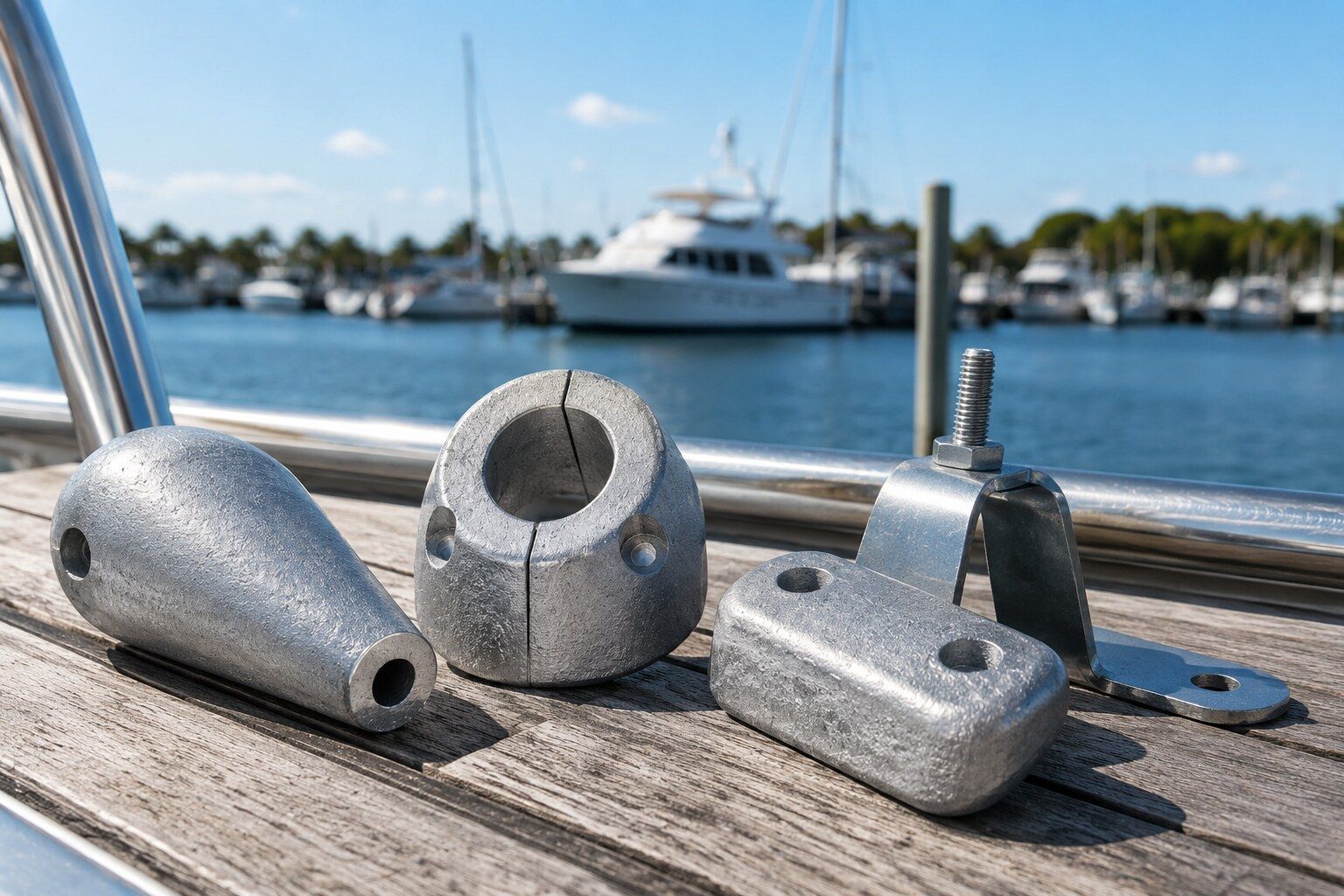
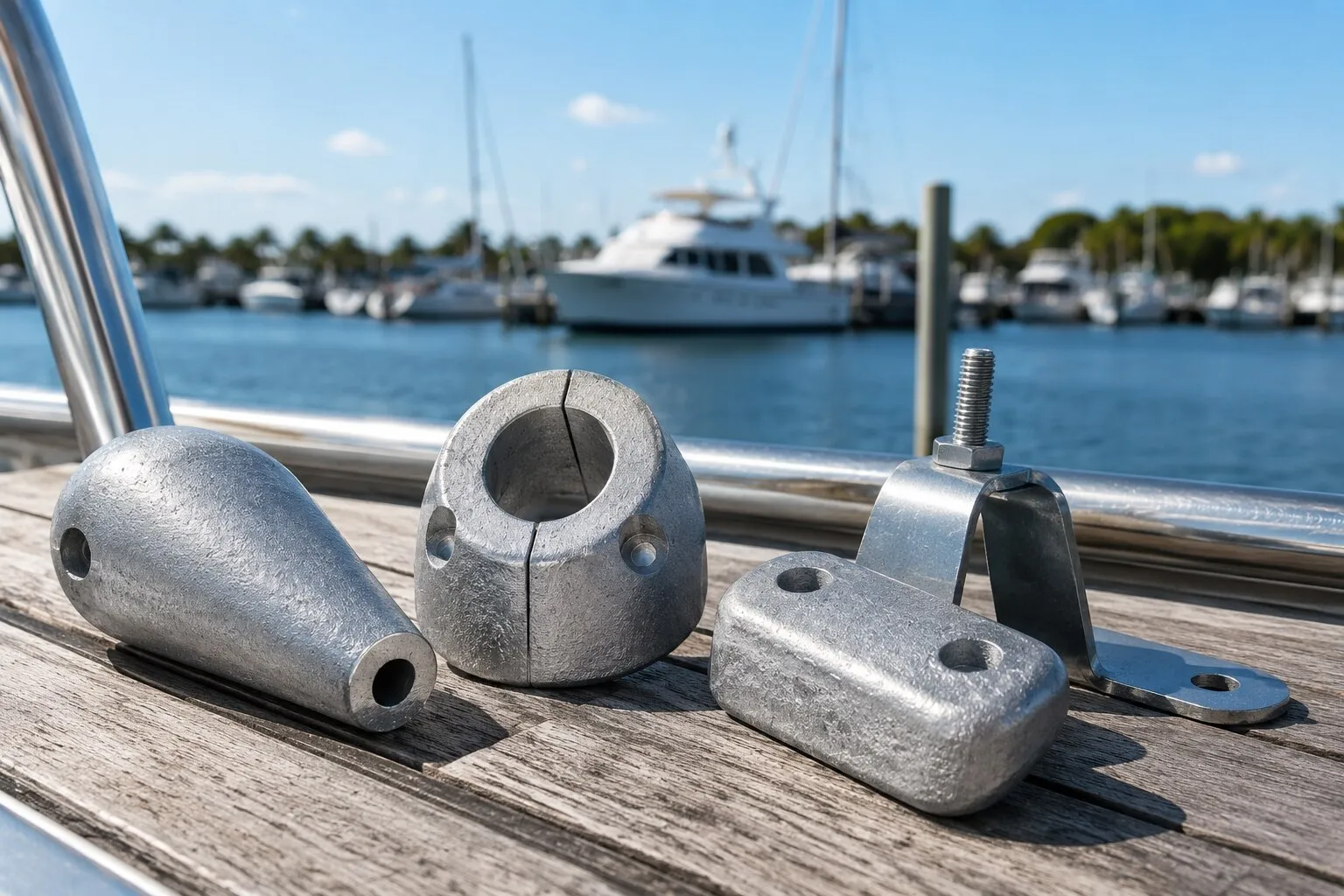
Everwin Sports manufactures sacrificial anodes that protect hulls, shafts, rudders, and engines from galvanic corrosion — zinc anodes for saltwater, aluminum for brackish water and improved capacity, and magnesium for freshwater service. The range covers hull and bolt-on plate anodes, shaft and collar anodes, engine and outdrive anodes, and rudder and trim-tab anodes, cast from high-purity alloy to recognized military and industry compositions for reliable, predictable output. Each anode is cast onto a galvanized steel insert or strap with the correct fastening, and surfaces are left bare for immediate activation. Standard patterns match common engine and drive brands, and custom castings are available.
Available factory-direct from our Weihai, China facility for wholesale, private-label and custom OEM production — alternate materials, sizes and branding, typically from 500 units, for buyers across major export markets.
Request a QuoteFeatures
Specifications
Every sacrificial anodes order is built under our quality & manufacturing process and backed by our standards & compliance documentation. See the full specification catalog or explore our marine hardware range.
Common questions
Which anode alloy should I use — zinc, aluminum, or magnesium?
Use zinc in saltwater, magnesium in freshwater, and aluminum in brackish water or where you want longer life and more capacity than zinc. Mixing the wrong alloy to the water type either under-protects the metal or wastes the anode. Tell us where the boat is kept and we will recommend the alloy and the number of anodes to fit.
What anode types do you make and where do they go?
We cast hull and bolt-on plate anodes, shaft and collar (ring) anodes, engine and outdrive anodes, and rudder and trim-tab anodes. Each protects a specific area of underwater metal, and a typical boat uses several. Send your engine or drive model and a list of the underwater fittings and we will match a set of patterns.
How are anodes sized and when should they be replaced?
Anode size is matched to the area and type of metal being protected, with bigger or additional anodes for larger running gear and busy marinas. Replace an anode once it has wasted to roughly half its original mass, and never paint the working surface. We can advise a replacement size and interval for your setup.
Can anodes be customized or produced under OEM or private label?
Yes — we cast custom patterns, insert and stud configurations, and alloy selections from your drawings or samples, and run OEM and private-label programs with branded marking and packaging. Tooling for recurring patterns can be developed. Provide a sample or drawing and the alloy, and we will quote and sample.
What is the minimum order quantity?
Standard anodes ship by the carton or pallet and consolidate toward container volume given their weight. Custom or private-label castings typically start around 500 units per pattern, depending on alloy and tooling. We confirm the exact minimum once the pattern and alloy are set.
What is the production lead time?
Standard anodes run about 30–45 days after deposit. A first-time custom or branded casting takes roughly 45–60 days including tooling and sampling, with repeats returning to 30–45 days. Casting, insert fitting, and marking are scheduled inside that window.