Marine · 3 min read · Updated
Corrosion is the single biggest factor in how long marine and fishing hardware survives in service. Saltwater, spray, and the constant wet-dry cycling of tidal work attack unprotected steel within weeks — and the right finish is what separates a trap or anchor that lasts one season from one that lasts a decade.
There is no single "best" finish. The right choice depends on whether the part is fully submerged, splash-exposed, or stored dry between uses; how much abrasion it sees; and your budget per unit. Here is how the four finishes we work with compare.
Hot-dip galvanizing
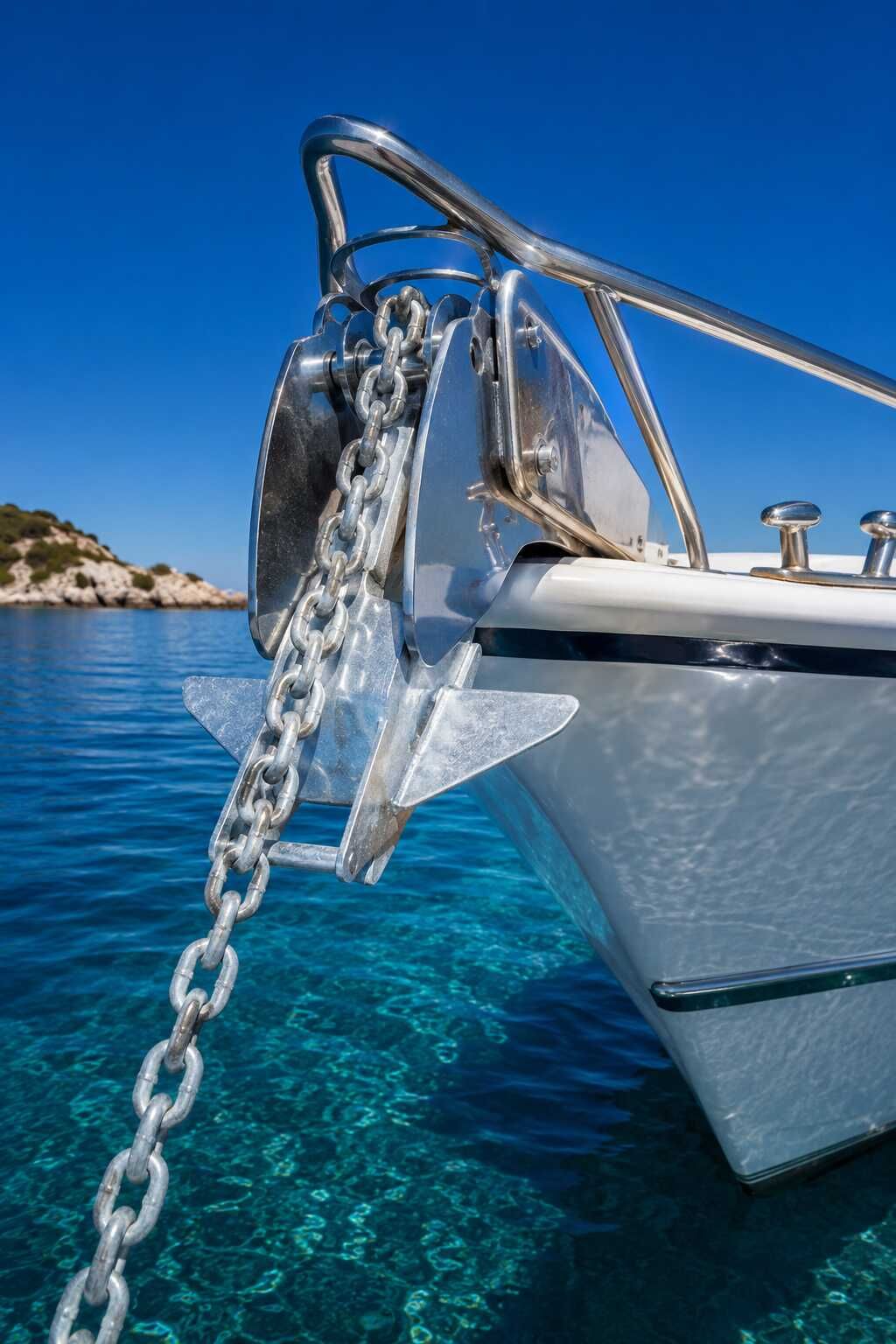
Hot-dip galvanizing bonds a thick zinc layer to steel by immersing the finished part in a molten zinc bath. The zinc is sacrificial — it corrodes in preference to the steel underneath, so even a scratched coating keeps protecting the base metal. That makes it the workhorse finish for anchors, chain, and structural wire that takes knocks in service.
- Best for: anchors, chain, shackles, heavy wire goods that see impact and abrasion
- Self-healing — sacrificial zinc protects exposed steel at scratches and cut edges
- Lower cost than stainless at comparable strength
- Trade-off: zinc is consumed over time; in continuous immersion it eventually depletes
Stainless steel — 304 vs. 316
Stainless resists corrosion through a passive chromium-oxide layer rather than a coating, so there is nothing to chip or wear through. The grade matters: 304 is fine for splash and freshwater, but for continuous saltwater exposure 316 — with added molybdenum for pitting and crevice-corrosion resistance — is the marine standard.
Stainless is the premium option. It is the right call for fasteners, swivels, and any part where a failure is expensive or a coating would abrade away, but it carries the highest material cost.
- 304: splash, spray, freshwater, and dry-stored hardware
- 316: continuous saltwater immersion — the true marine grade
- No sacrificial coating to wear through; cleanest appearance
- Trade-off: highest cost; can suffer crevice corrosion in stagnant, low-oxygen joints
PVC / marine-grade vinyl coating
A bonded PVC vinyl layer over galvanized steel wire adds a tough, abrasion-resistant barrier and a smooth surface that resists fouling and protects catch from damage. It is the standard for traps, baskets, and cages, where the coating also softens edges and extends service life in continuous saltwater. Specify lead-free, cadmium-free vinyl for regulatory compliance.
- Best for: crab and lobster traps, fishing baskets, sport cages
- Doubles as a wear and fouling barrier over galvanized wire
- Available in high-visibility colors for easy identification at sea
- Trade-off: a deep cut that exposes bare steel will corrode locally
Powder coating
Powder coat is an electrostatically applied, oven-cured polymer finish prized for a uniform, attractive surface and good UV stability. It suits sports-equipment framing and dry-stored or splash-exposed hardware. Coating thickness is the key durability variable — too thin and it fails early at edges — which is why uniform, controlled application matters more than the color you pick.
- Best for: goal frames, batting-cage structure, splash-zone and dry-stored hardware
- Excellent UV and color retention; smooth, consistent finish
- Trade-off: not for continuous immersion; durability hinges on even coating thickness
How to choose
Start with the service environment, not the price. Map each part to where it actually lives: continuously submerged, splash-exposed, or dry between uses. Submerged structural parts lean galvanized; submerged wire goods lean PVC-coated galvanized; critical fasteners and connectors lean 316 stainless; dry or splash-only framing leans powder coat. Then size the finish to the cost of failure — a $2 shackle that drops an anchor is not the place to save on grade.
- Where does the part live — submerged, splash, or dry-stored?
- How much abrasion and impact does it see in normal use?
- What does a failure cost — cosmetic, or load-bearing?
- Are there coating regulations to meet (lead-free / cadmium-free vinyl)?
- Is the finish thickness specified and inspected, not just the color?
Common questions
Is hot-dip galvanizing or stainless steel better for saltwater?
Neither is universally better — it depends on the part. Hot-dip galvanizing is the cost-effective workhorse for anchors, chain, and heavy wire goods because its sacrificial zinc keeps protecting the steel even when scratched. 316 stainless is the premium choice for fasteners, swivels, and critical connectors, with no coating to wear through. Match the finish to the part's environment and the cost of failure.
What is the difference between 304 and 316 stainless steel?
Both resist corrosion through a passive chromium-oxide layer, but 316 adds molybdenum for far better resistance to pitting and crevice corrosion in salt water. Use 304 for splash, spray, freshwater, and dry-stored hardware; specify 316 for continuous saltwater immersion — it is the true marine grade.
Why is PVC vinyl coating used on traps and fishing baskets?
A bonded PVC vinyl layer over galvanized wire adds an abrasion-resistant barrier and a smooth surface that resists fouling and protects catch from cuts. It is the standard for crab and lobster traps, baskets, and cages. Specify lead-free, cadmium-free vinyl to meet environmental and food-safety requirements.
Can powder-coated hardware be used underwater?
No — powder coat is best for goal frames, batting-cage structure, and splash-zone or dry-stored hardware, not continuous immersion. Its durability depends on even coating thickness; too thin and it fails early at edges. For submerged parts choose galvanizing, PVC-coated galvanized wire, or 316 stainless instead.
How do I choose a finish for marine hardware?
Start with the service environment, not the price. Map each part to where it lives — submerged, splash-exposed, or dry — then size the finish to the cost of failure. Submerged structure leans galvanized; submerged wire goods lean PVC-coated galvanized; critical fasteners lean 316 stainless; dry or splash framing leans powder coat.
Specification terms used in this guide — full definitions in the glossary .