Marine · 3 min read · Updated
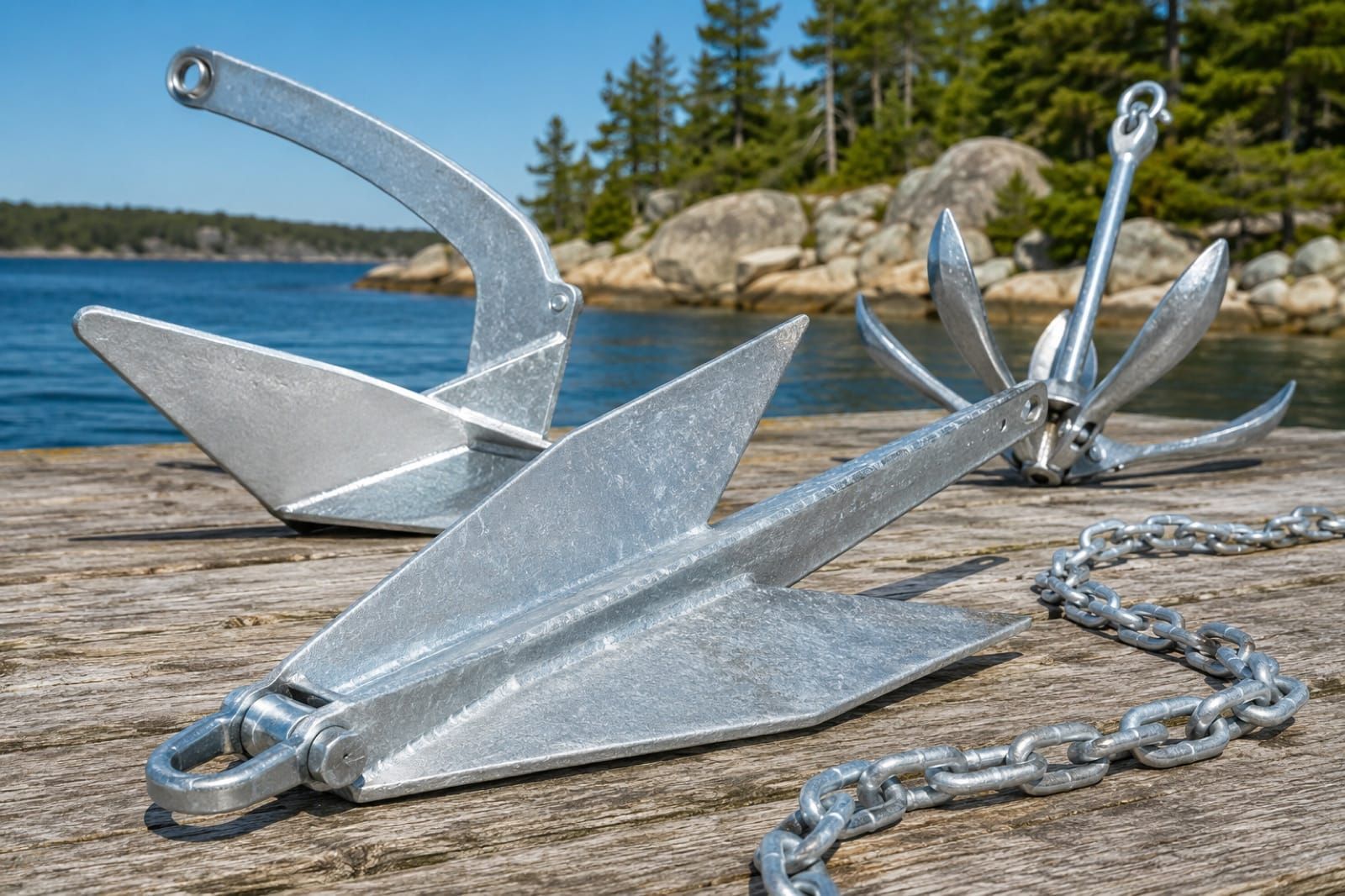
Ground tackle is a system — anchor, chain, connectors, and rode all have to be matched, and the weakest link sets the real holding power. Undersizing risks a dragged anchor; oversizing wastes money and deck space. Here are the principles buyers use to get it right.
Sizing depends on the specific vessel, bottom type, and exposure, so treat the ranges below as a starting framework and confirm against the vessel's classification or builder guidance.
Holding power, not just weight
Modern anchors are rated by holding power — the load they resist before dragging — which depends on design and bottom type as much as raw weight. A well-designed anchor that sets and digs in can out-hold a heavier anchor that skips across the bottom. Start from the holding power the vessel needs in its worst expected conditions, then choose a weight class that delivers it.
Matching anchor to the vessel
Size to displacement and windage, not just length. A high-windage vessel — lots of freeboard and superstructure — loads its anchor far harder in a blow than its length alone suggests. Use the builder's or anchor maker's sizing table as a baseline, then step up a class if the boat is heavy, high-windage, or anchors in exposed water.
- Base the class on displacement and windage, not length alone
- Step up one size for exposed anchorages or high-windage vessels
- Carry a second, larger storm anchor for severe-weather holding
Chain grade and diameter
Chain adds weight low in the rode, which keeps the anchor's pull horizontal so it stays dug in. Both diameter and grade matter: a higher-grade chain delivers the same working load at a smaller, lighter diameter. Match the chain's working load limit to the anchor and vessel, and confirm the chain's link pitch is compatible with the windlass gypsy that will haul it.
- Match chain working load limit to anchor and vessel loads
- Higher grade = same strength at lighter weight and smaller diameter
- Confirm link pitch matches the windlass gypsy
- Hot-dip galvanized is the durable standard finish
Scope and rode
Holding depends heavily on scope — the ratio of rode length to water depth. A common working target is around 5:1 and up to 7:1 in heavier conditions; too little scope lifts the anchor shank and breaks it out. All-chain rode holds at shorter scope than rope-and-chain because its weight keeps the pull horizontal. Size the locker and windlass for the rode length the deepest anchorage demands.
Connecting hardware
Connectors are where ground tackle most often fails, because they're easy to undersize. Every shackle, swivel, and link must meet or exceed the working load of the chain it joins, and should share its corrosion resistance — a stainless swivel on galvanized chain creates a maintenance and galvanic-corrosion watch point. Mouse or pin-secure shackles so vibration can't back them out.
- Shackle and swivel WLL ≥ the chain's working load
- Match finish across the system to limit galvanic corrosion
- Secure shackle pins (mousing) against vibration
- Anchor holding power sized to worst-case conditions and bottom type
- Weight class set by displacement and windage, then stepped up if exposed
- Chain working load limit matched to anchor and vessel
- Chain link pitch compatible with the windlass gypsy
- Rode length supports adequate scope at the deepest anchorage
- Shackles and swivels rated ≥ chain WLL, finishes matched, pins secured
Common questions
How do I size an anchor for my boat?
Size to holding power, not just weight. Start from the holding power the vessel needs in its worst expected conditions, base the weight class on displacement and windage rather than length alone, and step up a size for exposed anchorages or high-windage boats. Use the builder's or anchor maker's sizing table as a baseline.
What scope ratio should I use when anchoring?
Scope is the ratio of rode length to water depth, and holding depends heavily on it. A common working target is around 5:1, increasing to 7:1 in heavier conditions; too little scope lifts the anchor shank and breaks it out. All-chain rode holds at shorter scope than rope-and-chain because its weight keeps the pull horizontal.
How do I choose chain grade and diameter?
Match the chain's working load limit to the anchor and vessel loads. A higher grade delivers the same working load at a smaller, lighter diameter, which saves weight. Confirm the link pitch is compatible with your windlass gypsy, and choose hot-dip galvanized as the durable standard finish.
Should anchor shackles and swivels match the chain size?
Connectors are where ground tackle most often fails. Every shackle and swivel must meet or exceed the working load of the chain it joins and should share its corrosion resistance — mixing stainless and galvanized invites galvanic corrosion. Mouse or pin-secure shackles so vibration cannot back them out.
Does anchor weight or holding power matter more?
Holding power. Modern anchors are rated by the load they resist before dragging, which depends on design and bottom type as much as raw weight — a well-designed anchor that digs in can out-hold a heavier one that skips across the bottom. Choose the weight class that delivers the holding power you need.
Specification terms used in this guide — full definitions in the glossary .