Marine · 3 min read · Updated
A sacrificial anode protects underwater metal by corroding in its place. It works only if it is more electrically active than the metal it protects, and only if it stays active in the water it sits in. That second condition is why the alloy is chosen by water type.
Zinc, aluminum alloy and magnesium are the three anode materials. Each is correct in some waters and useless or harmful in others.
Selection chart by water type
Use one alloy throughout a bonded system. Mixing alloys makes the more active anode protect the less active one.
| Water | Zinc | Aluminum alloy | Magnesium |
|---|---|---|---|
| Salt water | Suitable — the traditional choice | Suitable — more capacity per kilogram | Not suitable — corrodes far too fast |
| Brackish water | Marginal — can form a coating and stop working | Recommended | Not suitable |
| Fresh water | Not suitable — stops working | Suitable | Recommended |
How the three alloys differ
The alloys differ in driving voltage, in how much current a kilogram delivers before it is consumed, and in how they behave in low-salinity water.
| Property | Zinc | Aluminum alloy | Magnesium |
|---|---|---|---|
| Activity (driving voltage) | Lowest of the three | Slightly higher than zinc | Highest |
| Current capacity per kilogram | Lowest | Highest — roughly three times zinc | Between zinc and aluminum |
| Weight | Heaviest | Less than half the density of zinc | Lightest |
| In fresh water | Forms an insulating coating | Stays active | Stays active; the standard choice |
| Typical specification | MIL-A-18001 (ASTM B418 Type I) | MIL-DTL-24779 | MIL-A-21412 |
Aluminum anodes are an alloy of aluminum with zinc and indium, not plain aluminum; the indium keeps the surface from forming a protective oxide. Because they stay active across salt and brackish water and last longer for their weight, they have replaced zinc on many boats that move between waters.
Why the water type matters
Fresh water conducts electricity poorly. A zinc anode cannot drive enough current through it, and it soon forms a hard coating that stops it working altogether — while still looking intact. Magnesium has the driving voltage to work in fresh water.
In salt water the reverse applies. Magnesium is so active that it is consumed in weeks and can overprotect the hull, lifting paint and damaging aluminum and wooden structures. A boat kept in fresh water on magnesium anodes should not be left in salt water with them fitted.
Anode types and replacement
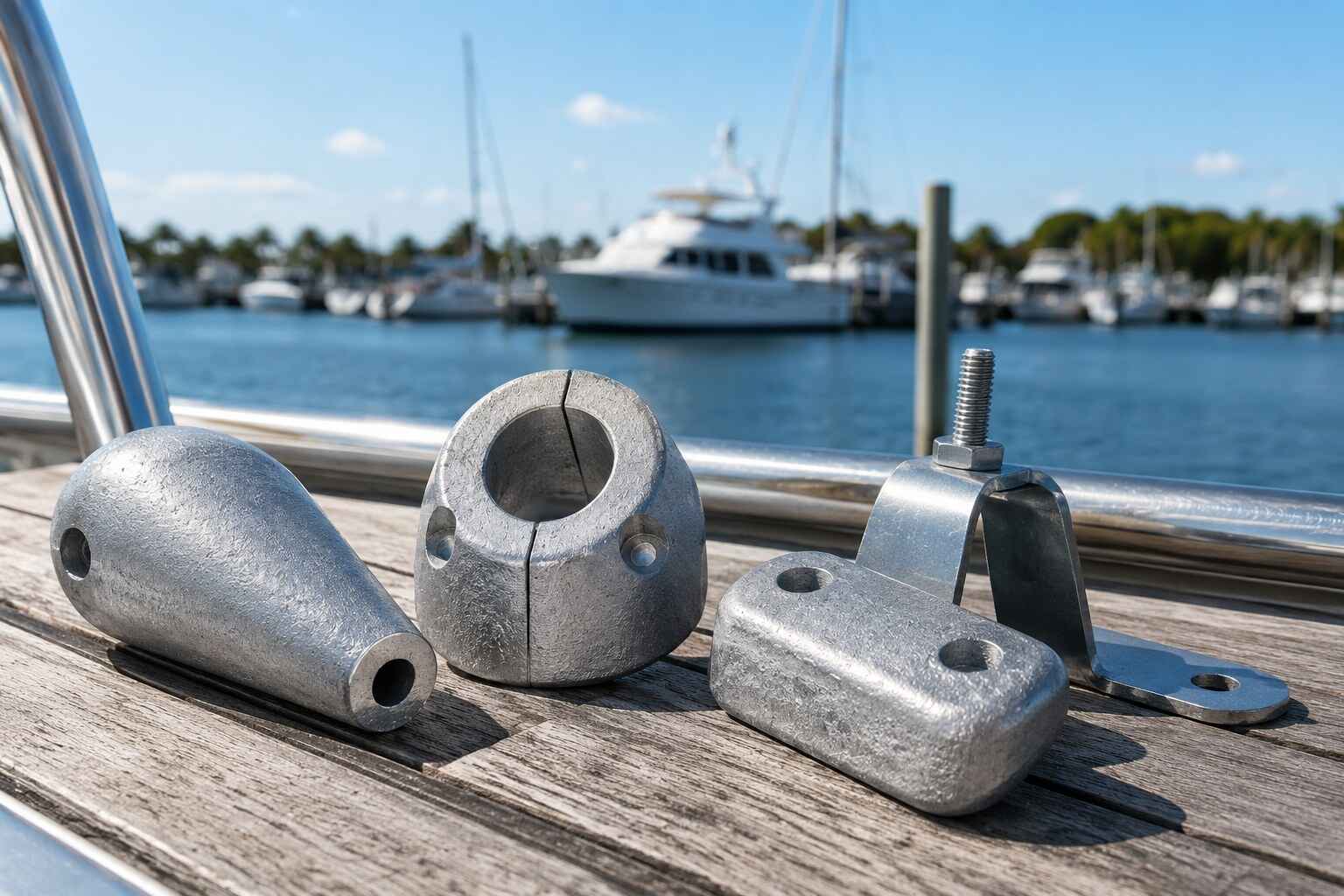
Anodes are made in shapes to suit each fitting, and all work the same way.
Replace an anode when about half of it has been consumed. Fit new anodes to clean, bare metal so the electrical contact is good, and never paint them. An anode that shows no wear after a season is not a good sign: it usually means poor contact or the wrong alloy for the water.
- Hull plate and bolt-on anodes — fixed to the hull or keel and bonded to the underwater metal.
- Shaft collar anodes — clamped to the propeller shaft.
- Rudder, trim tab and propeller nut anodes — fitted to the part they protect.
- Engine (pencil) anodes — threaded into the cooling system of raw-water-cooled engines.
- Hanging anodes — lowered over the side on a cable and connected to the bonding system while moored.
- Water: salt, brackish or fresh — and whether the vessel moves between them
- Alloy: zinc, aluminum alloy or magnesium, the same throughout the system
- Alloy specification (MIL-A-18001, MIL-DTL-24779 or MIL-A-21412) and a composition certificate
- Anode type and the fitting it must match: shaft diameter, hole centers, thread
- Weight per anode and quantity per vessel
- Packaging and labeling by alloy, so the wrong alloy is not fitted
Common questions
Should I use zinc or aluminum anodes in salt water?
Both work in salt water. Aluminum alloy anodes deliver more protective current per kilogram, weigh less and stay active if the boat enters brackish water, so many builders now recommend them. Zinc remains a sound and widely used choice for boats that stay in salt water.
What anodes should be used in fresh water?
Magnesium anodes are the standard choice in fresh water, and aluminum alloy anodes also work. Zinc anodes should not be used: fresh water conducts poorly and zinc forms a coating that stops it protecting the boat.
What anodes are best for brackish water?
Aluminum alloy anodes. Zinc can form a coating and stop working in low-salinity water, and magnesium corrodes too quickly as salinity rises.
Can magnesium anodes be used in salt water?
No. Magnesium is too active for salt water. It is consumed very quickly and can overprotect the hull, damaging paint and aluminum or wooden structures.
When should a sacrificial anode be replaced?
When about half of it has been consumed. Check anodes at each haul-out, and more often in warm water or in a marina with stray electrical current. Fit the replacement to clean, bare metal.
- ASTM B418 — Standard Specification for Cast and Wrought Galvanic Zinc Anodes
- U.S. military specifications MIL-A-18001 (zinc), MIL-DTL-24779 (aluminum) and MIL-A-21412 (magnesium) for sacrificial anodes
- ABYC E-2 — Cathodic Protection (American Boat and Yacht Council)