Sports · 4 min read · Updated
Two nets can look identical in a product photo and perform nothing alike in the field. The fiber, the twine thickness, the knot, and whether the netting is UV-treated decide whether it lasts a decade or frays out in a single season — and those choices matter far more than the unit price on the quote.
Almost all sports and barrier netting is built from one of three fibers: HDPE (polyethylene), nylon (polyamide), or polyester. Here is how they compare, and how to turn that into a specification a supplier can't quietly downgrade.
HDPE (polyethylene)
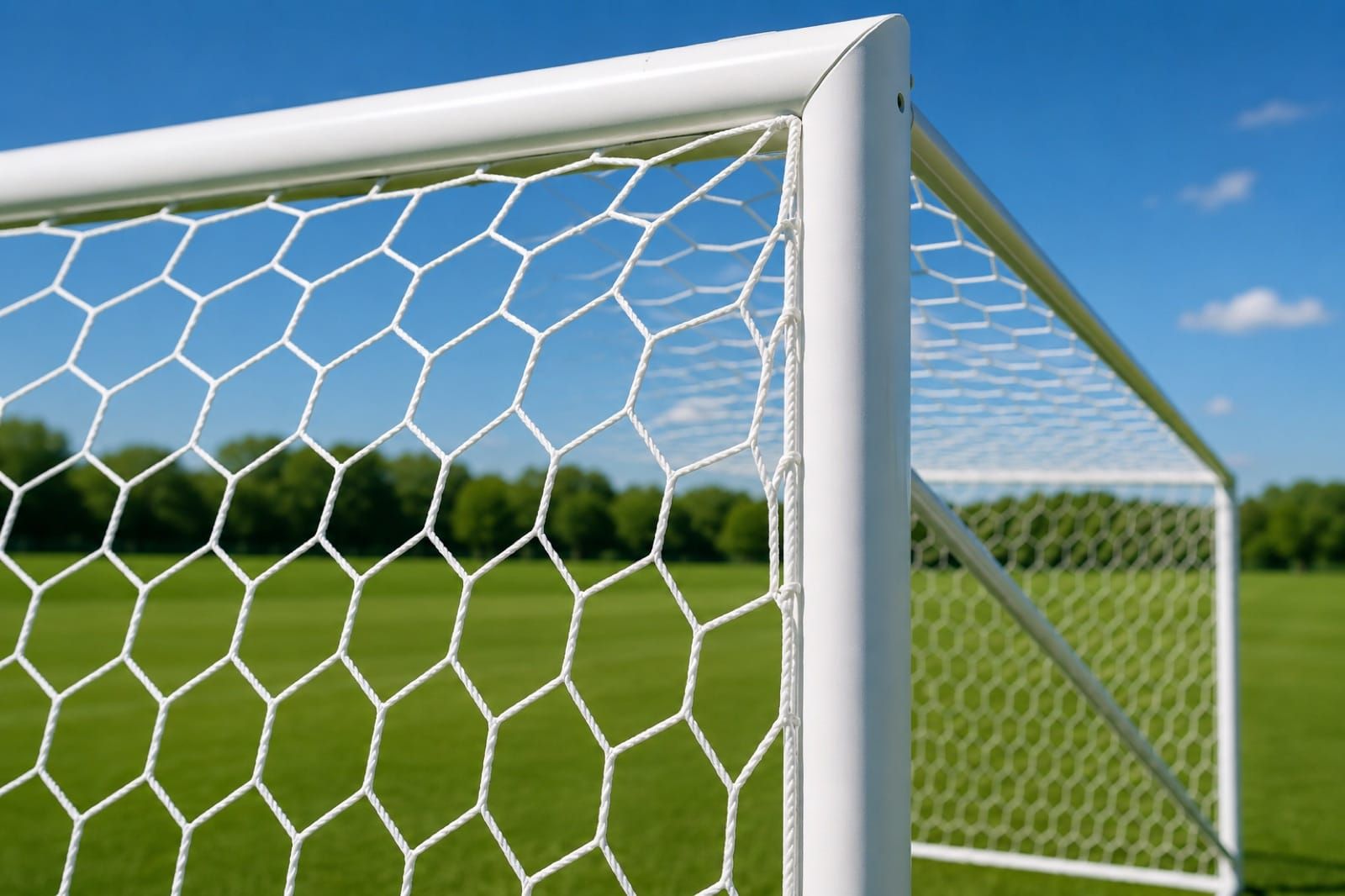
High-density polyethylene is the workhorse of outdoor netting. It is strong for its weight, naturally resistant to water and most chemicals, and — when properly UV-stabilized — holds up to sun and weather better than the alternatives. Because it absorbs almost no water, an HDPE net stays light and consistent in the rain and dries quickly, which is why it dominates soccer nets, golf barriers, and perimeter netting.
- Best for: outdoor soccer nets, golf and driving-range barriers, perimeter and divider nets
- Low water absorption — stays light and dimensionally stable when wet
- Excellent weather and chemical resistance when UV-stabilized
- Trade-off: lower stretch than nylon, so it absorbs impact less softly
Nylon (polyamide)
Nylon is the strongest and most elastic of the three, and that elasticity is the point: it stretches under impact, absorbing energy instead of transmitting the full shock to the frame and the fixings. That makes it the classic choice for high-impact containment like batting cages and hockey nets, where the net takes repeated hard hits. The trade-off is water — nylon absorbs it, gaining weight and losing a little strength when soaked, and it dries slowly, so it must be stored dry or it invites mildew.
- Best for: batting cages, hockey nets, high-impact containment
- Highest tensile strength and elasticity — absorbs impact energy well
- Trade-off: absorbs water (heavier when wet); dry before storage to avoid mildew
Polyester
Polyester splits the difference and adds one virtue the others lack: dimensional stability. It holds tension and shape under sustained load and resists stretching over time, so a polyester net stays taut and true rather than sagging. It absorbs far less water than nylon and offers good UV resistance, which makes it a strong pick for nets that must look and play consistently — tennis nets, knotless competition netting, and tensioned barrier work.
- Best for: tennis nets, knotless competition nets, tensioned barrier systems
- Dimensionally stable — holds tension and shape without sagging
- Good UV resistance and low water absorption
- Trade-off: less impact-absorbing stretch than nylon
Knotted vs. knotless, twine size and mesh
Fiber is only half the spec. A knotted net is more abrasion-resistant, easy to repair locally, and concentrates strength at the knots — the traditional build for batting cages and heavy containment. A knotless net has a smoother, snag-free surface and distributes load more evenly, which suits volleyball and competition nets. Then size the twine and mesh to the job: twine is given as a number (such as #36 or #42) or as denier/ply, and a larger number means thicker, stronger cord. The mesh opening must be small enough to stop the ball it is built for.
- Knotted: more abrasion-resistant, locally repairable, strong at the knots
- Knotless: smoother, snag-free, even load distribution
- Twine: higher # / denier = thicker, stronger cord
- Mesh: size the opening to the smallest ball it must contain
UV treatment and how to choose
For anything that lives outdoors, UV treatment is non-negotiable — untreated synthetic netting embrittles and fails within a season or two of direct sun, regardless of fiber. Start the choice from the environment and the load: outdoor and weather-exposed leans UV-treated HDPE or polyester; high-impact containment leans knotted nylon; tensioned, must-stay-taut installations lean polyester. Then write the fiber, knot type, twine size, mesh, and UV treatment into the order so "net" can't be substituted for something lighter.
- Fiber chosen for the environment (HDPE / nylon / polyester)
- Knotted vs. knotless matched to impact and repairability needs
- Twine size (# or denier) specified, not just "heavy-duty"
- Mesh opening sized to the ball or containment requirement
- UV treatment specified for any outdoor installation
- Edge binding, headband, and cable/rope rated for the span
Common questions
Which is better for sports netting — HDPE, nylon, or polyester?
Each fits a different job. UV-stabilized HDPE is the outdoor workhorse for soccer nets and golf and perimeter barriers because it barely absorbs water. Nylon is strongest and most elastic, ideal for high-impact batting cages and hockey nets. Polyester is dimensionally stable and holds tension, suiting tennis and knotless competition nets.
What netting material is best for outdoor use?
UV-treated HDPE or polyester. HDPE absorbs almost no water so it stays light and stable in rain, and both resist sun when UV-stabilized. Whatever the fiber, UV treatment is non-negotiable outdoors — untreated synthetic netting embrittles and fails within a season or two of direct sun.
What is the difference between knotted and knotless netting?
A knotted net is more abrasion-resistant, easy to repair locally, and concentrates strength at the knots — the traditional build for batting cages and heavy containment. A knotless net has a smoother, snag-free surface and distributes load more evenly, which suits volleyball and competition nets.
What does the netting twine number (like #36 or #42) mean?
Twine size is given as a number such as #36 or #42, or as denier/ply, and a larger number means thicker, stronger cord. Specify the twine size on the order rather than "heavy-duty," and size the mesh opening to the smallest ball the net must contain, so a supplier cannot quietly substitute lighter netting.
Why does nylon netting need to be stored dry?
Nylon absorbs water, so it gets heavier and loses a little strength when soaked, and it dries slowly — stored wet it invites mildew. That is the trade-off for its high strength and impact-absorbing elasticity. If water exposure and quick drying matter more than stretch, HDPE or polyester is the better pick.
Specification terms used in this guide — full definitions in the glossary .