Fishing · 3 min read · Updated
A crab or lobster trap looks simple, but small specification choices — wire gauge, mesh size, funnel angle — drive catch rate, durability, and whether the trap is even legal in your fishery. Getting the spec right before you order saves a season of underperforming gear.
This guide walks the decisions a buyer or OEM program makes, in the order they matter.
Wire gauge and mesh opening
Gauge sets the strength-to-weight balance. Heavier 11-gauge wire takes rough handling and storms; lighter 12-gauge saves weight and cost where conditions are calmer. Mesh opening is partly a catch decision and partly a regulatory one — many fisheries mandate a minimum mesh so undersized animals escape. Match mesh to your target species and confirm it against local rules before ordering.
- 11-gauge: heavy commercial service, exposed grounds, deep sets
- 12-gauge: lighter, lower cost, calmer or shallower water
- Mesh: 1.5" × 1.5" or 2" × 2" common — verify against fishery minimums
Coating
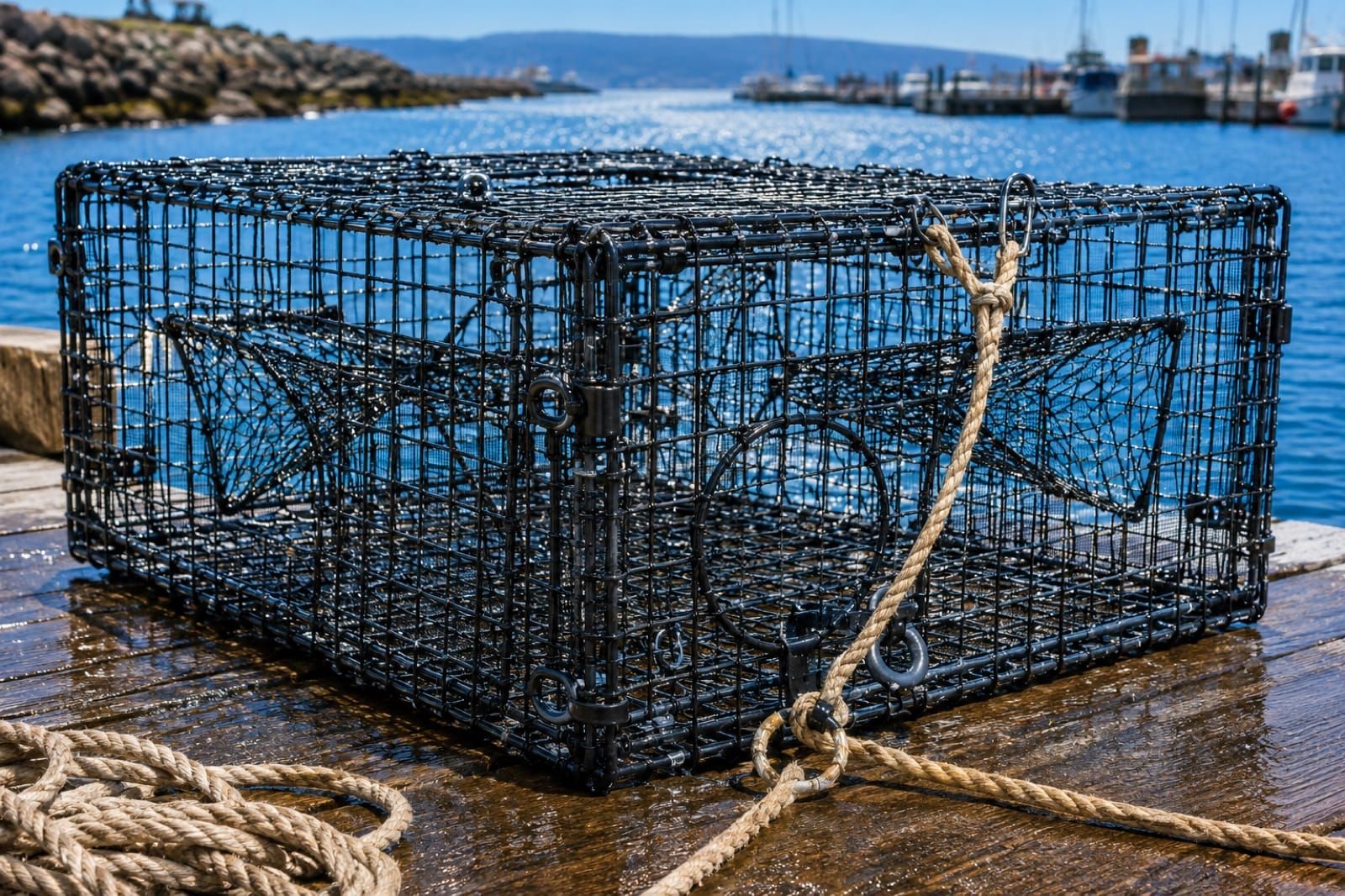
Bare or galvanized-only wire is a false economy in saltwater. Marine-grade PVC vinyl over galvanized wire is the durable standard — it resists corrosion, takes abrasion on rocky bottom, and protects catch from cuts. Specify lead-free, cadmium-free vinyl so the trap meets environmental and food-safety expectations.
Trap geometry and funnels
Funnel (entry) design is the single biggest lever on catch rate. The number, placement, and angle of funnels control how easily target animals enter and how hard it is for them to back out. More aggressive funnels raise catch but can raise bycatch — so geometry is tuned to the species and the fishery, not maximized blindly. Stackable rectangular bodies also matter for deck and storage efficiency on a working boat.
Escape panels and regulatory compliance
Most managed fisheries require biodegradable escape panels (also called ghost panels or rot cords) so that a lost trap eventually stops fishing — preventing "ghost fishing" that kills animals with no benefit. These are not optional in most waters. Confirm the required panel material, dimensions, and placement for your jurisdiction, and have them built in rather than retrofitted.
Buoys and rigging
The trap is only half the system. High-visibility, unsinkable floats keep your gear locatable and legal; closed-cell EVA/PVC foam buoys stay buoyant even if the skin is nicked. Match rope, clips, and rigging hardware to the trap weight and bottom conditions, and spec corrosion-resistant clips and hog rings so the weak point isn't the connection.
Sizing for your fishery
Finally, size the trap to the animal and the grounds — a heavy 36" trap that holds in current is wrong for a shallow inshore set, and vice versa. Standard 24" and 36" bodies cover most programs, but OEM and custom sizing is worth it when your fishery or vessel has specific constraints.
- Wire gauge matched to handling and depth (11 vs. 12-gauge)
- Mesh opening legal for the fishery and right for the target species
- Lead-free, cadmium-free marine-grade PVC vinyl coating
- Funnel count and angle tuned to species and bycatch limits
- Biodegradable escape panels sized and placed per local rules
- High-visibility unsinkable buoys and corrosion-resistant rigging
- Body size matched to grounds, current, and vessel storage
Common questions
What wire gauge should a commercial crab or lobster trap use?
Heavier 11-gauge wire is best for heavy commercial service, exposed grounds, and deep sets where traps take rough handling and storms; lighter 12-gauge saves weight and cost in calmer or shallower water. Both are vinyl-coated over galvanized steel for corrosion resistance.
What mesh opening do I need for a trap?
Mesh is part catch decision, part regulation. Common openings are 1.5" x 1.5" and 2" x 2", but many fisheries mandate a minimum mesh so undersized animals escape. Match the mesh to your target species and confirm it against local fishery rules before ordering.
Do crab and lobster traps need escape panels?
In most managed fisheries, yes. Biodegradable escape panels (ghost panels or rot cords) ensure a lost trap eventually stops fishing, preventing ghost fishing. They are not optional in most waters — confirm the required panel material, dimensions, and placement for your jurisdiction and have them built in, not retrofitted.
How does funnel design affect catch rate?
Funnel (entry) design is the single biggest lever on catch rate. The number, placement, and angle of funnels control how easily target animals enter and how hard it is to back out. More aggressive funnels raise catch but can raise bycatch, so geometry is tuned to the species and fishery rather than maximized blindly.
Can traps be customized for my fishery, and at what quantity?
Yes — wire gauge, mesh, coating color, funnel geometry, escape panels, and body size can all be built to your fishery and vessel. Standard 24" and 36" bodies cover most programs; custom and OEM sizing is worth it for specific constraints, typically from around 500 units.
Specification terms used in this guide — full definitions in the glossary .