Sports · 3 min read · Updated
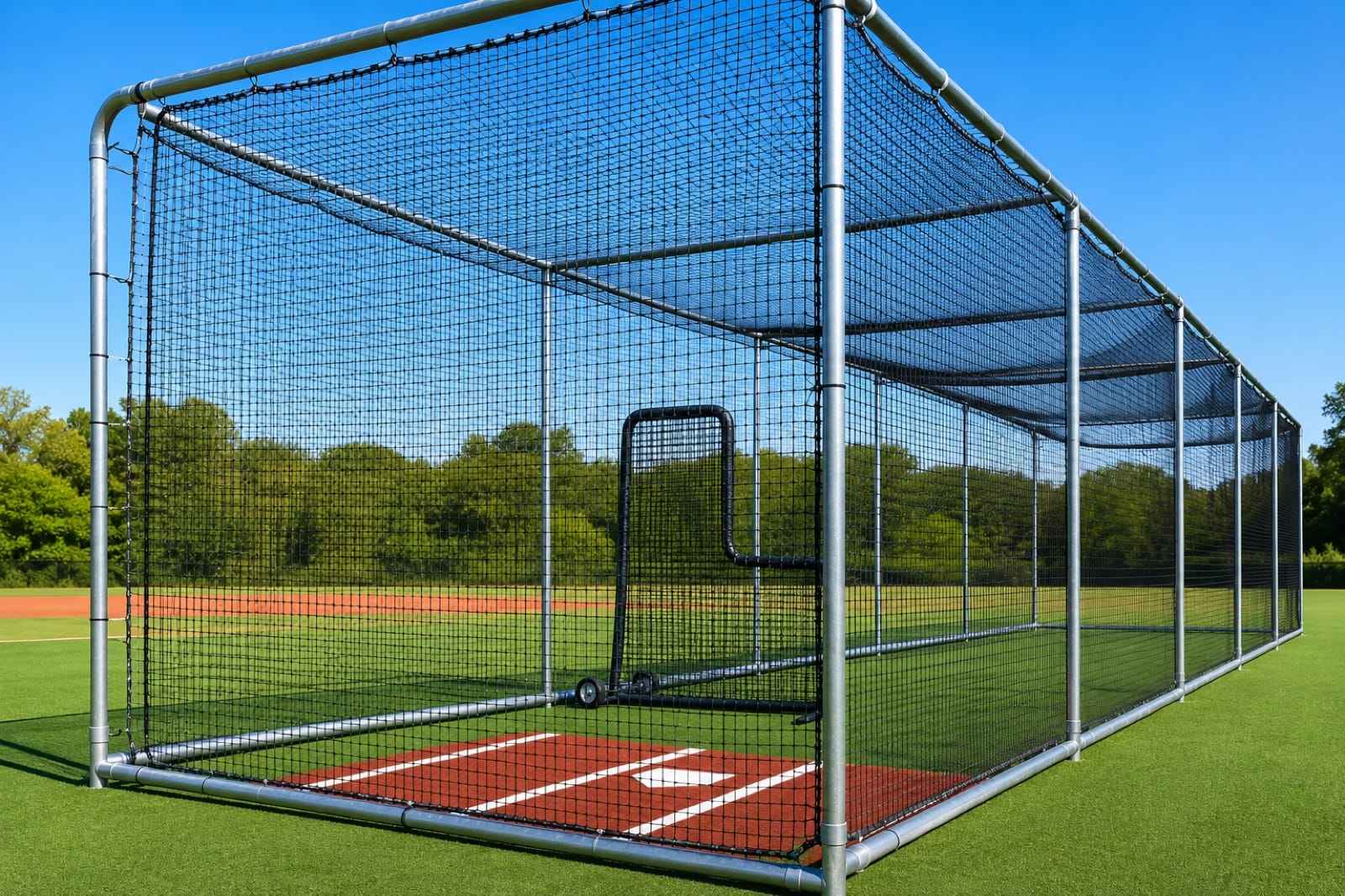
Two decisions define a batting cage net: how heavy the twine is, and how big the cage is. The twine decides how many seasons of hitting the net absorbs. The dimensions decide whether hitters can take live pitching at full distance.
Both follow from the level of play and the hours of use. The charts below give the usual choice for each.
Twine size by level of play
Batting cage netting is normally knotted nylon or knotless polyethylene in a 1-3/4 in square mesh. The twine number is the durability grade.
| Twine | Typical diameter | Typical breaking strength | Suited to |
|---|---|---|---|
| #21 | 1.7–1.9 mm | 190–210 lb | Backyard and youth cages, light seasonal use |
| #36 | 2.3–2.5 mm | 330–360 lb | High school, travel teams, clubs |
| #42 | 2.5–2.8 mm | 380–430 lb | College and heavy daily use |
| #60 | 3.0–3.5 mm | 550–620 lb | Commercial facilities and professional use |
A net that takes a few hundred balls a week will last years in #21. The same net in a commercial facility taking thousands a day wears through in a season, which is why facilities specify #42 or #60 and often add a separate impact panel behind the plate.
Cage dimensions by level of play
Length is set by the pitching distance plus room behind the pitcher and the hitter. Width and height are set by the swing and the flight of the ball off the bat.
| Level | Pitching distance | Cage length | Width × height |
|---|---|---|---|
| Youth baseball (12 and under) | 46 ft | 35–55 ft | 12 ft × 10–12 ft |
| High school baseball | 60 ft 6 in | 55–70 ft | 14 ft × 12 ft |
| College and professional baseball | 60 ft 6 in | 70 ft or longer | 14–16 ft × 12 ft |
| Fastpitch softball | 43 ft (shorter for youth) | 55 ft | 12–14 ft × 12 ft |
| Tee and soft-toss station | — | 20–35 ft | 12 ft × 10 ft |
A 55 ft cage is the common compromise: long enough for front toss, machine pitching and softball at full distance. A 70 ft cage is needed for live baseball pitching from 60 ft 6 in with room behind the mound. A width of 14 ft lets right- and left-handed hitters use the same plate with an L-screen in place.
Nylon or polyethylene
Nylon is the stronger fiber and absorbs impact best, which is why heavy-use and indoor cages are nylon. It takes up water, so outdoor nylon nets are dyed and treated with a weather and UV coating. Polyethylene (HDPE) takes up no water and resists sun well, costs less and weighs less, but is weaker at the same twine diameter — a sound choice for outdoor cages with moderate use.
Hanging the net so it lasts
How the net is hung matters as much as the twine.
- Hang the net inside the frame with a gap of 12 in or more, so that a ball driving the net outward does not reach a pole.
- Leave slack. A net stretched tight rebounds the ball and concentrates wear; order the net about 1 ft taller than the hanging height so the bottom rests on the ground.
- Specify a rope border on all edges and at the ridgelines; the border carries the hanging load.
- Add a separate impact panel or backdrop behind the plate, where most balls land, and replace that panel instead of the cage net.
- Lower or slide the net in off-season weather where the frame allows.
- Level of play and estimated balls per week
- Indoor or outdoor
- Cage length, width and height — and the frame or cable it hangs from
- Twine size, material and knotted or knotless
- Mesh size (1-3/4 in square is standard for baseball and softball)
- Border rope, ridgeline ropes and door or overlap entry
- Impact panel behind the plate; dividers for multi-lane cages
Common questions
What size batting cage do I need?
For youth baseball and softball, a cage 35 to 55 ft long, 12 ft wide and 10 to 12 ft high is enough. For high school baseball, plan 55 to 70 ft long, 14 ft wide and 12 ft high. For live pitching at the full 60 ft 6 in distance, use a 70 ft cage.
Is #21 or #36 netting better for a batting cage?
#36 is heavier and lasts longer. #21 is adequate for a backyard or youth cage with light seasonal use. Choose #36 for high school players, teams or daily use, and #42 or #60 for college and commercial facilities.
What mesh size is used for batting cage nets?
1-3/4 in square mesh is the standard for baseball and softball. It stops a baseball with a margin while keeping the net light enough to see through and to hang from cable.
How long does a batting cage net last?
It depends on twine size, hours of use and exposure. As a guide, a lightly used #21 net lasts a few seasons outdoors, and heavier #36 to #60 nets last several years. Indoor nets outlast outdoor nets, and a replaceable impact panel behind the plate extends the life of the main net.
How much slack should a batting cage net have?
Hang the net loosely, with about 1 ft of extra height resting on the ground and at least 12 in of clearance from the frame. Slack lets the net absorb the ball instead of rebounding it, and keeps balls from striking the poles.